If your existing Melbourne home feels cold in winter, hot in summer, or noisier than it should be, your walls are a likely culprit. Walls account for around 25 percent of heat loss and heat gain in a typical home, yet most Melbourne houses built before the mid-2000s have no wall insulation at all.
Until recently, fixing that meant a major renovation — ripping off plaster, repainting every room, and living through weeks of disruption. Not anymore. Retrofit cavity wall insulation lets us blow insulation into the empty cavity inside your existing walls in a single day, with no plasterboard removal and no internal disruption.
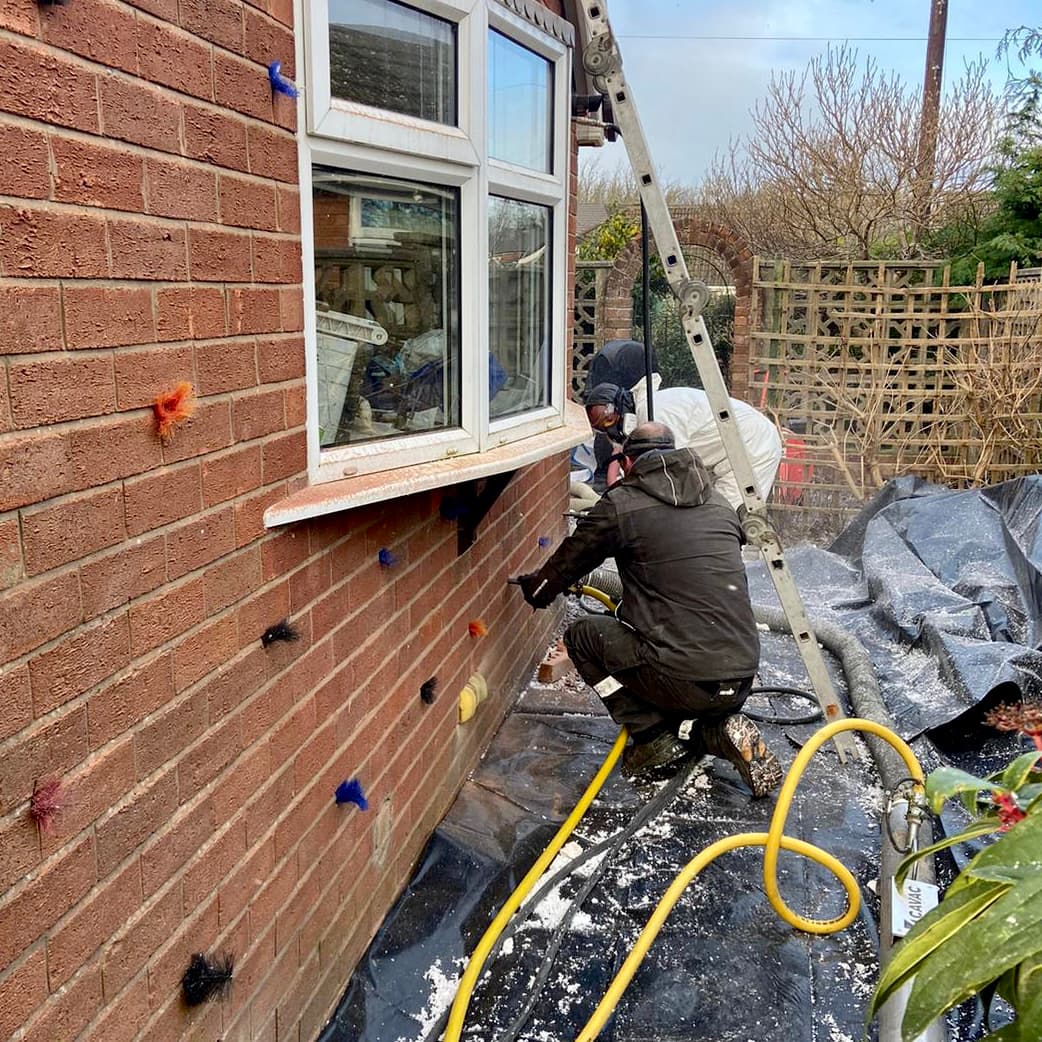
We've installed cavity wall insulation across Melbourne in double brick, brick veneer and weatherboard homes — from Federation cottages in Carlton to 1990s brick veneers in Berwick. Below is everything you need to know, including a clear guide to whether your home is suitable.
Quick check: Not sure if your existing walls have a cavity? Most Melbourne homes built between the 1920s and early 2000s do. Book a free consultation → or call 0495 099 995.
Why Retrofit Wall Insulation Matters in Existing Melbourne Homes
Ceiling insulation gets all the attention because the roof is responsible for up to 35 percent of heat transfer. But walls aren't far behind. In an uninsulated existing Melbourne home, here's where your heating and cooling money is going:
- Roof and ceiling: up to 35%
- Walls: around 25%
- Floors: 10–15%
- Windows and air leaks: the remainder
If you've already insulated your ceiling and your home still feels uncomfortable — particularly your western-facing rooms in summer or your bedrooms in winter — your walls are the missing piece. For more on roof insulation as a starting point, see our roof insulation guide.
What is Cavity Wall Insulation?
Cavity wall insulation is exactly what the name suggests: insulation installed inside the empty cavity that sits between the inner and outer skins of your existing wall. In Melbourne, this cavity exists in three of the most common wall constructions — double brick, brick veneer, and weatherboard — and in nearly every case, that cavity is currently empty.
For decades, the only way to insulate an existing wall was to remove the plasterboard, install batts, replaster and repaint. Blown-in cavity wall insulation changes that completely. Through a series of small drilled holes, we pump premium Knauf Supafil insulation directly into the wall cavity until it's completely filled. The holes are sealed and patched, and your home is left with insulated walls — no renovation required.
Can You Insulate Existing Walls Without Renovating?
Yes — and for most Melbourne homes built before the mid-2000s, this is now the standard approach. Retrofit cavity wall insulation requires:
- A wall with an empty cavity (true for almost all double brick, brick veneer and weatherboard homes)
- A cavity wide enough for the appropriate product (40mm minimum for double brick)
- A clean cavity free of major obstructions or pre-existing moisture issues
If your home meets those criteria, blown-in wall insulation can be completed in a single day with no plaster removal, no repainting, and no need to vacate your home.
The Three Wall Types We Retrofit in Melbourne
Blown-in cavity wall insulation works on the three most common Melbourne wall types. The product and access method change depending on construction, but the principle is the same: fill the existing cavity through small drilled holes, no plaster removal required.
Double Brick Cavity Wall Insulation
Double brick is common in Edwardian, Federation, Californian Bungalow, post-war and inner-suburb Melbourne homes built before the 1970s. Two skins of brick are separated by a cavity originally designed for moisture management. In nearly every case, that cavity is empty.
For double brick cavity insulation we use Knauf Supafil CarbonPlus — engineered specifically for masonry cavity retrofits. Covered in detail further down.
Brick Veneer Wall Insulation
Brick veneer is the dominant Melbourne construction style from the 1960s to early 2000s. An outer brick skin and a timber-framed inner wall, with a cavity between them. Brick veneer cavities are typically deeper than double brick cavities, so retrofit brick veneer wall insulation usually delivers higher thermal performance once filled. We use Knauf Supafil Frame for these installations.
Weatherboard Wall Insulation
Weatherboard construction is common across Melbourne's older suburbs and regional Victoria. The cavity sits between the wall studs behind the cladding. We can often install weatherboard wall insulation through lifted boards or discreet drilling so no patching is visible afterwards. Also installed using Knauf Supafil Frame.
Quick Comparison: Wall Types, Cavities & Products
| Wall type | Cavity depth | Product used | R-value added | Cost range |
|---|---|---|---|---|
| Double brick | 40–50mm | Knauf Supafil CarbonPlus | R1.0 – R1.5 | $30–$45 / m² |
| Brick veneer | 70–90mm | Knauf Supafil Frame | R1.5 – R2.5 | $25–$40 / m² |
| Weatherboard | 70–90mm | Knauf Supafil Frame | R1.5 – R2.5 | $25–$40 / m² |
If your home falls into any of these categories, retrofit cavity wall insulation is worth exploring.
Lower your heating and cooling costs from your first full billing cycle.
Most of our customers notice the difference immediately.
How Blown-In Cavity Wall Insulation Works
The process is straightforward and almost always completed in a single day:
- Free consultation.We discuss your existing home, wall construction, current comfort and energy concerns, and confirm whether retrofit cavity wall insulation is likely to be the right solution. You'll receive a written quote based on your wall area and construction type.
- Borescope cavity inspection on installation day. Before any drilling, we use a small camera to confirm cavity width, condition and any pre-existing issues. If the cavity isn't suitable, we don't proceed and you don't pay.
- Drill pattern mapping. We choose access points designed for the cleanest possible finish — mortar joints for double brick, between studs for veneer and weatherboard.
- Drilling. Small holes (typically 22mm) are drilled in a regular grid pattern.
- Pumping. Knauf Supafil is pumped into the cavity under controlled pressure until every void is full.
- Sealing and patching. Mortar is re-pointed to match the existing wall. Plaster or cladding holes are patched and finished.
- Verification. Fill density and complete coverage are confirmed before sign-off.
There's no need to vacate your home, no plaster removal, no painting required, and minimal dust — the product is delivered through sealed hoses straight into the cavity.
Why We Use Knauf Supafil for Cavity Wall Insulation
Not all blown-in wall insulation is the same. We use Knauf Supafil products exclusively because they're engineered for the specific cavity types found in existing Melbourne homes — and because Knauf is the same manufacturer behind the Earthwool batts we install in ceilings.
Knauf Supafil CarbonPlus — Double Brick Cavity Wall Insulation
Knauf Supafil CarbonPlus is engineered specifically for double brick masonry cavities. The features that matter for double brick wall insulation:
- CodeMark-certified product for masonry cavity application — the standard your insurer, conveyancer and any future buyer will look for.
- Silicone-treated for moisture resistance — engineered to resist moisture, which is the historic concern with insulating double brick cavities.
- Non-combustible — important in older homes with mixed-vintage wiring.
- Unbonded fibres that flow into every gap — no on-site mixing or chemical reactions.
- Minimum 40mm cavity required — confirmed during the installation-day borescope inspection.
- Sustainable — each bag contains the equivalent of 45+ recycled glass bottles. Declare-certified and Red List Free.
Knauf Supafil Frame — Brick Veneer & Weatherboard Wall Insulation
Knauf Supafil Frame is the equivalent product for timber-framed cavities found in brick veneer and weatherboard homes. Same Knauf quality, same blown-in installation principle, matched to stud wall construction. Brick veneer and weatherboard cavity insulation typically achieves higher cavity R-values than double brick simply because the cavity is deeper.
Cavity Wall Insulation Cost in Melbourne
Retrofit cavity wall insulation in Melbourne typically ranges between $25 and $45 per square metre of wall area, depending on:
- Wall construction type (double brick, brick veneer, weatherboard)
- Total wall area
- Single versus double storey (scaffolding may be required)
- Internal versus external access
- Site complexity (heritage façades, attached boundaries)
For a typical single-storey three-bedroom Melbourne home with around 100m² of external wall area, you can expect a project cost in the $2,500 to $4,500 range. We provide site-specific written quotes after every free consultation — no hidden charges. For a broader pricing breakdown across all insulation types, see our 2026 Melbourne insulation cost guide.
Autumn slots fill quickly.Melbourne's coldest months are weeks away, and cavity retrofit jobs booked in autumn are typically completed faster and at better rates than mid-winter emergency work. Book your free consultation now →
Real-World R-Values for Retrofit Wall Insulation
Here's the honest answer most installers won't give you. A filled double brick cavity adds around R1.0 to R1.5 of thermal resistance. A filled brick veneer or weatherboard cavity adds around R1.5 to R2.5.
Those numbers look small compared to the R6.0 to R7.0 you'd aim for in a ceiling. But the important context is this: your existing walls almost certainly started at R0. Going from R0 to R1.5 isn't an incremental improvement — it's the difference between a wall that does nothing and a wall that does its job.
What you'll actually feel after retrofit wall insulation is installed:
- Western-facing rooms that no longer overheat on 35°C+ afternoons
- Bedrooms that hold temperature overnight without the heater cycling
- Quieter rooms — Knauf Supafil dampens airborne sound transfer significantly
- Even temperatures between rooms that previously felt completely different
- Lower energy bills from the first full billing cycle after installation
For more on the gap between rated and real-world insulation performance, see our insulation ratings vs reality guide.
Will Cavity Wall Insulation Cause Moisture Problems?
This is the single most common concern Melbourne homeowners raise about double brick cavity insulation. The honest answer:
The double brick cavity exists for moisture management. Filling it with the wrong product can cause problems. That's why Knauf Supafil CarbonPlus is silicone-treated and certified specifically for masonry cavity application — it's engineered to manage moisture, not trap it.
Where pre-existing rising damp, roof leaks or moisture issues are present, we identify them and tell you they need to be addressed before any insulation goes in. We won't install over a problem.
When Cavity Wall Insulation Isn't Right for Your Home
We regularly turn down jobs when a home isn't suitable, and we'd rather lose the sale than do bad work. Retrofit cavity wall insulation isn't right when:
- Your home is solid brick or solid masonry with no cavity (some older inner-Melbourne properties)
- Your cavity is narrower than the product minimum (40mm for Knauf Supafil CarbonPlus on double brick)
- There is pre-existing rising damp, roof leaks, or moisture issues that need fixing first
- The cavity contains debris or a previous failed installation
- Your walls are scheduled for major renovation in the near future — better to install batts during the reno
We'll talk you through suitability during your free consultation and confirm cavity condition with the borescope inspection on installation day before any drilling begins.
Cavity Wall Insulation FAQs
How do I know if my existing walls have a cavity?
Most Melbourne homes built between the 1920s and the early 2000s have cavity walls. We can usually confirm this during your free consultation based on your home's age and construction. The borescope inspection on installation day verifies the cavity width and condition before any drilling.
Can you insulate existing walls without removing plaster?
Yes. Blown-in cavity wall insulation is installed through small drilled holes — typically through the external wall — without touching the plasterboard inside your home. No plaster removal, no repainting, no internal disruption.
How long does retrofit wall insulation take to install?
Most single-storey Melbourne homes are completed in one day. Double-storey homes may take longer if scaffolding is required.
Are the holes from blown-in wall insulation visible afterwards?
On double brick, holes are drilled through mortar joints and re-pointed to match — usually invisible from a few metres away. On brick veneer and weatherboard, we choose discreet access points and patch to match existing finishes.
Can cavity wall insulation be installed from inside if my home is on a shared boundary?
Yes. Both Knauf Supafil CarbonPlus and Knauf Supafil Frame support interior installation methods — useful for terraces, semis and homes with restricted external access.
Does cavity wall insulation reduce noise?
Yes. Knauf Supafil is dense enough to dampen airborne sound transfer significantly. Many of our cavity wall customers comment on the noise reduction first. See our acoustic insulation guide for more.
Is retrofit wall insulation covered by the Victorian Energy Upgrades (VEU) rebate?
Eligibility under the VEU program changes regularly. Contact us for the current rebate position on wall insulation, or read our VEU rebate 2026 guide for the latest on what's covered.
Will wall insulation increase my home's value?
Energy-efficient homes with up-to-date insulation are increasingly valued by Melbourne buyers and renters. Documentation from a certified installation is transferable, which matters at sale.
How does wall insulation compare to ceiling insulation for energy savings?
Ceiling insulation delivers the bigger single hit (around 35% of heat loss). Retrofit wall insulation is the next-biggest opportunity (around 25%) and is what most existing Melbourne homes haven't done. The two together create a complete thermal envelope.
Why Choose 1 Stop Insulation for Cavity Wall Insulation in Melbourne
Most insulation companies in Melbourne don't offer cavity wall retrofit at all — and the few that do often subcontract the work. Here's what makes us different:
- In-house installation teams, not subcontractors. The same crews on every job, accountable for fill density and finish quality.
- Borescope cavity inspection on installation day before any drilling, so we confirm cavity condition with our own eyes — not assume it.
- Premium Knauf Supafil products — Knauf Supafil CarbonPlus for double brick, Knauf Supafil Frame for brick veneer and weatherboard. Same manufacturer behind the Earthwool batts we use in ceilings.
- Honest consultations — if your home isn't suitable, we'll tell you. We regularly turn down jobs for this reason.
- Workmanship guarantee on every retrofit wall insulation installation.
- Servicing all of Melbourne and regional Victoria — from inner-suburb terraces to outer-suburb veneers and regional weatherboards.
Rated 5/5 on Google with 200+ reviews. Trusted by over 1,200 Victorian homeowners.
Get a Free Cavity Wall Insulation Consultation
If your existing home has cold walls in winter, hot rooms in summer, or rooms that are noisier than they should be, retrofit cavity wall insulation is worth exploring. The consultation is free, the written quote is no-obligation, and we'll talk you through whether your home is suitable before any commitment.
Request your free cavity wall insulation consultation →
Or call us: 0495 099 995